





Tags:Food and AgricultureKanto
Ichikawa City, Chiba Prefecture
Raising Awareness of Food and Health Among Citizens
On August 31, the “5th Tasty Community Enrichment Symposium in Chiba” was held at the Zen-Nippon Security Hall (Yawata Civic Center) in Ichikawa City, and over 200 participants, including citizens, government officials, and local legislators, attended. The event featured a lecture by Honorary President Yoshiaki Watanabe of Niigata University of Food and Agriculture, followed by a panel discussion. Many citizens raised their awareness of community enrichment through the promotion of healthy food education.
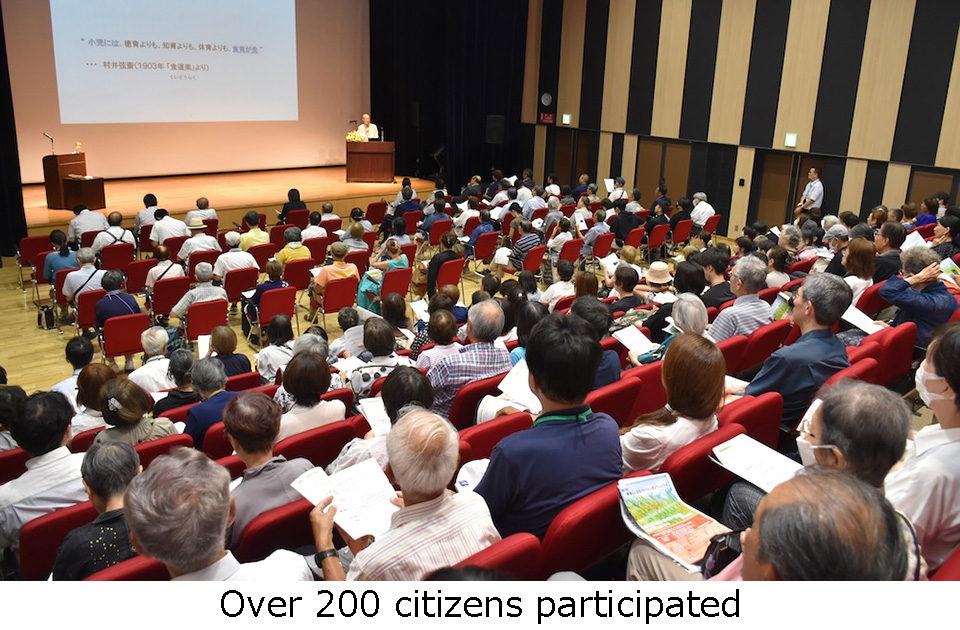
The event commenced with a greeting from Tsuneo Ishihara, Chairman of the Executive Committee, who represented the organizers. Following the greetings from the distinguished guests, including Senator Masakazu Usui and Kyoko Yokoyama, Director of the Health Department who read a message from Mayor Ko Tanaka, and Senator Seiko Hashimoto who delivered a video message wishing for a successful symposium.
Honorary President Watanabe delivered a lecture titled “Creating the Body with Food, Creating the Mind with the Way of Eating.” He highlighted the correlation between the rising national medical expenses, which have surpassed 48 trillion yen, and the declining rice consumption among the population, emphasizing the importance of promoting healthy food education for children. Watanabe introduced examples such as elementary schools that have set days when 100% of the school lunch ingredients are locally sourced, and schools that have created rice paddies on their premises to teach students about rice cultivation. He explained that these initiatives are supported by the collaboration of families, schools, and communities, with additional support from JA (Japan Agricultural Cooperatives) and local governments.
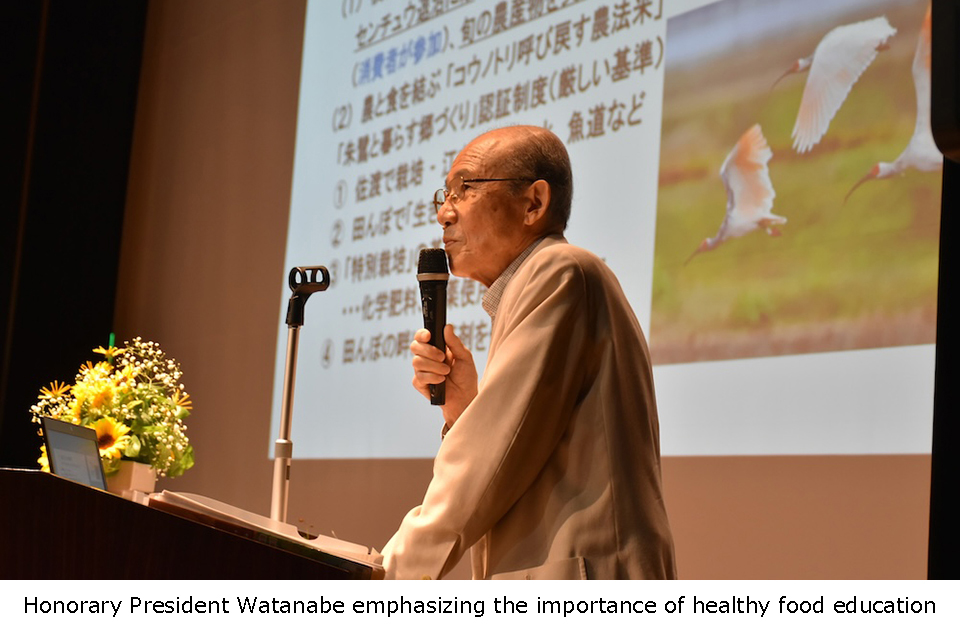
While introducing the promotion of organic farming on Sado Island, Niigata Prefecture, which aims to coexist with the Japanese crested ibis, and the advanced state of organic farming in Europe, Watanabe mentioned the Ministry of Agriculture, Forestry and Fisheries “Strategy for Sustainable Food Systems,” which aims to expand the area of organic farmlands. He emphasized the concept that “school lunches nurture agriculture” as a way to achieve this goal, advocating for the importance of community-wide efforts to incorporate organic agricultural products into school lunches.
In the panel discussion, administrative officials from Kisarazu City and Isumi City in the same prefecture appeared via video, introducing their initiatives to incorporate organic agricultural products into school lunches. Following this, panelists from various fields related to food and health presented on the theme “Efforts to Expand Deliciousness.”
Kumi Naruse, representative of the non-profit organization Lotus Leaf Red Co., Ltd., which participates in the MOA Nature Farming Chiba Central Dissemination Society, reported that they received certification under the Nature Farming Method (during the conversion period) last year and are producing a variety of vegetables with a focus on lotus root. Naruse introduced their diverse activities, including the maintenance of fields and traditional houses aimed at providing a place to learn about life and food and to cultivate the power to live, the employment of people with disabilities and foreign personnel, support for children’s cafeterias, and harvest experience events.
Takako Sakai, a MOA Healthy Food Advisor from Ōamishirasato City, shared her experience of visiting the Tokyo Wellness Center when she developed diabetes. She reviewed her lifestyle habits and, with the understanding and cooperation of her family, adopted a vegetable-centered diet and moderate exercise, which led to an improvement in her condition. Drawing from this experience, she now promotes the Okada Healthy Food Program as a MOA Healthy Food Advisor, organizing activities such as miso and salt koji making and cooking classes. Sakai introduced how the joy of healthy eating is spreading among the community through these activities.
Mitsuyuki Chiba, President of the Certified NPO Healthy Life Network, spoke from the perspective of a dentist, explaining the importance of chewing food well and the role of saliva in maintaining health, and provided insights into oral care. He further mentioned that the intestines, where ingested food ultimately ends up, are often referred to as the “second brain,” highlighting the significance of intestinal health. Chiba emphasized that maintaining health is supported by the intake of better foods, such as organic agricultural products.
Masuyo Toyoda, a Registered Dietitian at the Tokyo Wellness Center and a board member of the MOA Health Science Center, explained that the cycle of gratitude exchanged between producers using the Nature Farming Method, the soil that nurtures the crops, the people who transport the food, and those who eat it contributes to sustainable community enrichment. She emphasized the importance of the Japanese dietary lifestyle, encouraging people to review their lifestyle habits while enjoying the process and guiding them towards health with the Okada Healthy Food Program. Toyoda also introduced the qualifications of MOA Healthy Food Supporters and Healthy Food Advisors associated with the program.
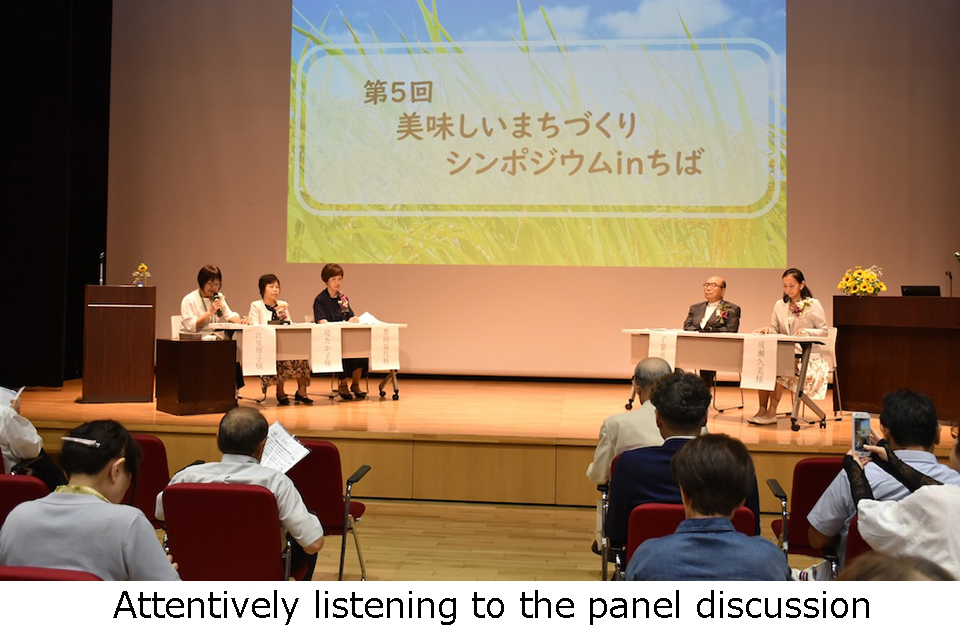
Participants shared their thoughts: “I learned a lot about the importance of incorporating locally produced ingredients into school lunches. I realized that facing the food in front of us, including local production for local consumption and the efforts of those who produce and cook the food, influences the healthy growth of children.” Another participant remarked, “I gained valuable insights into the importance of the Japanese dietary lifestyle and expanding organic farming. The presentations in the panel discussion were enlightening not only from the perspectives of agriculture and nutrition but also in teaching about the functions of the mouth while eating. It was great to learn about the importance of food from various angles.”
This symposium has been continuously held in various locations throughout the prefecture with the hope of contributing to the creation of healthy individuals and communities through healthy food education. It was previously held in Funabashi City (2021), Narashino City (2022, 2023), and Chiba City (2024). The symposium aims to widely convey the importance of healthy food education to the residents of the prefecture.
Co-hosted by: Tasty Community Enrichment Symposium in Chiba Executive Committee, MOA Healthy Food Network Chiba, MOA Nature Farming and Culture Foundation Chiba Federation
Supported by: MOA Health Science Center, Ministry of Agriculture, Forestry and Fisheries, Chiba Prefecture, Ichikawa City, Chiba City, Narashino City, Funabashi City, Sakura City, Yotsukaido City, Narita City, Yachimata City, Ōamishirasato City, Izumi City, Ichihara City, Kisarazu City, Kimitsu City, Shiroi City, Kamagaya City, Kashiwa City, Futtsu City, Mobara City, Sodegaura City, Tomisato City, Kozaki Town, Tōnoshō Town, Tako Town, Ichikawa City Board of Education, Noda City Board of Education, Chiba Nippo,
Cooperated by: Association for a Bright Society Chiba Prefecture Branch
