





Tags:Food and AgricultureKanto
Sado City, Niigata Prefecture
Discussing Food and Agriculture Based on Government Policies
On November 9, the “Symposium on Creating a Beautiful and Vibrant Island—A Day Aiming for a Society Where Humans and Toki (Japanese Crested Ibis) Coexist and Everyone Can Participate in Agriculture” was held at the Airport Sado Main Hall. Approximately 180 participants, including citizens, government officials, educators, and local agricultural workers, attended the event. The symposium featured a keynote speech by Chosei Nakamura, Director of the Agricultural Policy Division of Sado City, followed by a panel discussion with three panelists. Participants deepened their understanding of Sado City’s policies on “conservation of the natural environment,” “promotion of health,” and “advancement of agriculture.” The event also heightened awareness of the importance of contributing to the creation of an attractive island from their respective positions.
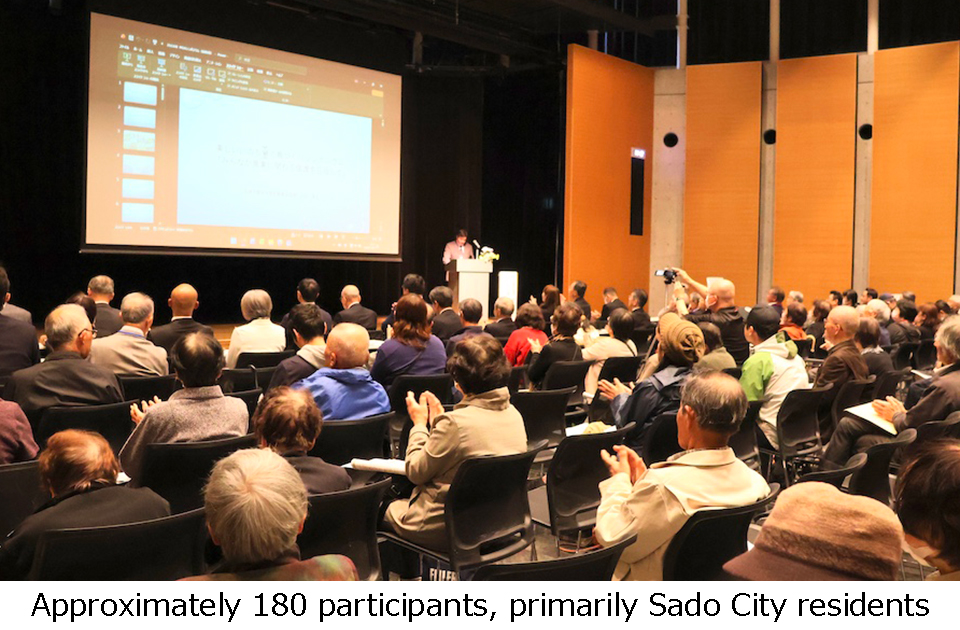
At the opening of the symposium, Masanori Sugimoto, President of the MOA Nature Farming and Culture Foundation, gave a greeting on behalf of the organizers. Representing the distinguished guests, Yoshimi Ota, Director of the Niigata Prefecture Sado Regional Promotion Bureau, read a message from Governor Hideyo Hanakaku, while Sado Mayor Ryuugo Watanabe delivered a congratulatory message via video. Congratulatory telegrams were also presented.
Director Nakamura’s lecture, titled “Aiming for a Sado Where Everyone is Involved in Agriculture,” touched on the revised “Basic Law on Food, Agriculture, and Rural Areas” of 2024. He explained that the law highlights clear challenges such as creating an environmentally harmonious food system and maintaining rural community cohesion amid population decline. Nakamura introduced Sado City’s initiatives based on these principles, which aim to involve many people in agriculture through working in the fields, helping out, and consuming the harvested produce.
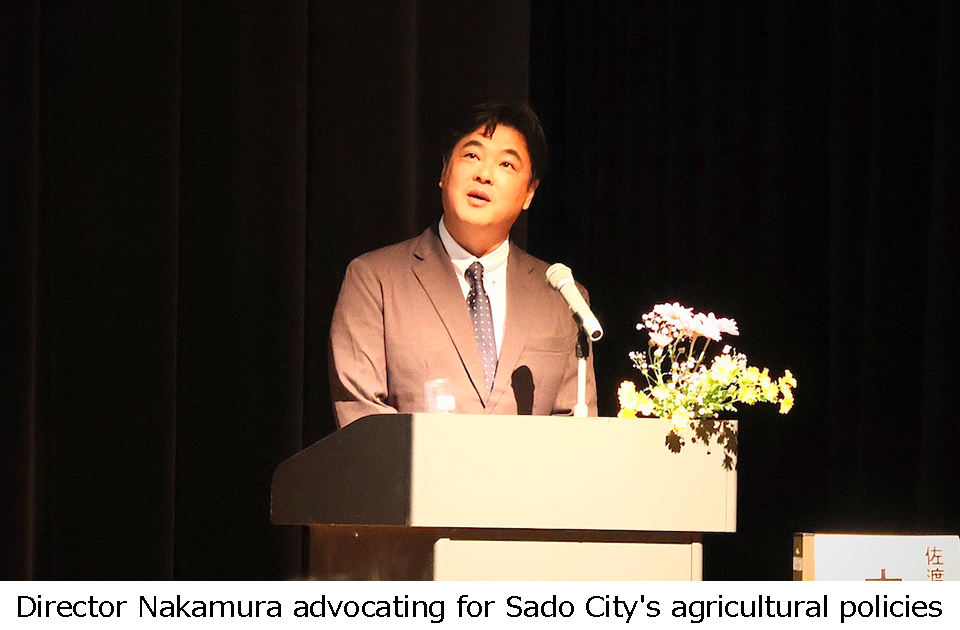
Director Nakamura explained Sado City’s unique certification system, “Creating a Village Living with Toki (Japanese crested ibis),” which began in 2007. This initiative aims to reduce the use of synthetic chemical pesticides and fertilizers by more than 50% and promote biodiversity by not using herbicides on the ridges that serve as feeding grounds for the Toki. He mentioned that rice produced under this system, known as “Kurasu Sato,” is also utilized in school lunches. Furthermore, Sado City was recognized as a Globally Important Agricultural Heritage System (GIAHS) in 2011 for its “Sado’s Satoyama in Harmony with Toki.” Currently, 88% of the approximately 5,500 hectares (21.2 sq. mi.) of rice paddies in the city practice the 50% reduced cultivation method, while cultivation without synthetic chemical pesticides and fertilizers, including the MOA Nature Farming Method, remains at just 1%. Nakamura emphasized the city’s efforts to expand this practice. He expressed a desire to attract more people interested in agriculture that is friendly to both the Toki and humans by enhancing food education, ultimately aiming to create an attractive island that connects to the future.
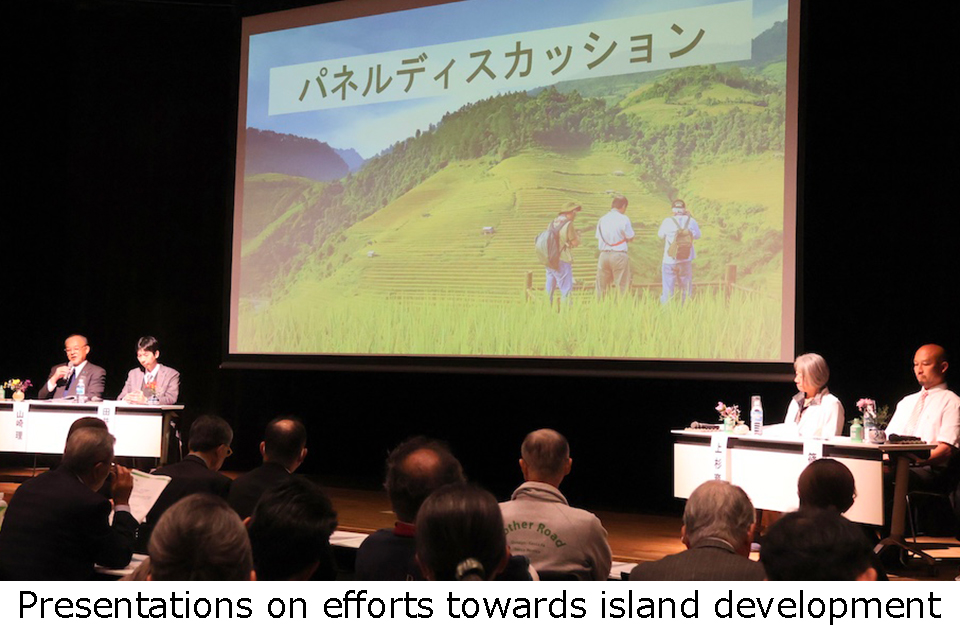
In the panel discussion, moderated by Osamu Yamazaki, Director of the Sado Health Center in Niigata Prefecture, panelists introduced various efforts to promote cultivation methods that do not rely on synthetic chemical pesticides and fertilizers.
Panel Discussion Highlights: Ikuko Uesugi, Representative of Farm 193 (Ikusan), Certified Eco-Farmer and Fruit Producer Ikuko Uesugi shared her experiences of being frail during her childhood and how she was inspired by the Okinawan phrase “nuchigusui” (life’s medicine). Embracing the motto “Agriculture is a life-creating industry,” she described her commitment to low-pesticide and chemical-free cultivation while interacting with nature, receiving its blessings, and fostering bonds with people through empathy.
Go Shinohara, President of the Association to Protect the Future of Sado’s Children Go Shinohara reflected on how a family illness led him to question modern dietary and lifestyle habits. Currently, he manages the inn “Isaribi no Yado Doyu,” where he serves meals primarily made with organic agricultural products, emphasizing the principles of “shindofuji” (local production for local consumption) and food safety. He also introduced the activities of the “Association to Protect the Future of Sado’s Children,” which he founded to promote environmental conservation and health through initiatives like organic markets.
Kazutaka Tainaka, Professor at the Brain Research Institute, Niigata University
Professor Kazutaka Tainaka discussed the impact of interacting with natural environments, including agriculture, on human health. He emphasized that creating an environment where everyone engages in agriculture in Sado City, which is enhancing its ecosystem through the spread of reduced-pesticide cultivation, has a positive effect on children’s health. Tainaka also introduced research findings on horticultural therapy from the United Kingdom, stating that agricultural activities can reduce feelings of loneliness and foster a sense of belonging to society. He argued that such activities are highly effective in rebuilding communities in a super-aging society.
Kyoko Tamura, a public health nurse from the Sado City Health and Medical Measures Division, shared her thoughts, stating, “I was reminded of the importance of food in protecting life.” She expressed her desire to address public health issues by fostering an environment where children grow up with safe rice and vegetables, thereby raising health awareness across all generations.
Dissemination Association, delivered the closing remarks. After the symposium, participants enjoyed the concurrent exhibition and sales of agricultural products grown through organic and nature farming methods at the event booths inside the hall, including tasting newly harvested rice.
Hosted by: MOA Nature Farming Niigata Prefecture Dissemination Association, MOA Nature Farming and Culture Foundation/Co-hosted by: MOA Nature Farming Sado Dissemination Association/Sponsored by: Niigata Organic Liaison Council, JA Sado Nature Farming Research Association, Sado City Consumers’ Association, Yume no Tani Farm/Supported by: Niigata Prefecture, Sado City, Sado City Board of Education, Sado Steam Ship Co., Ltd., Niigata Nippo, BSN Niigata Broadcasting, NST Niigata General Television, TeNY Niigata Television Network 21, UX Niigata Television 21, Sado Television
